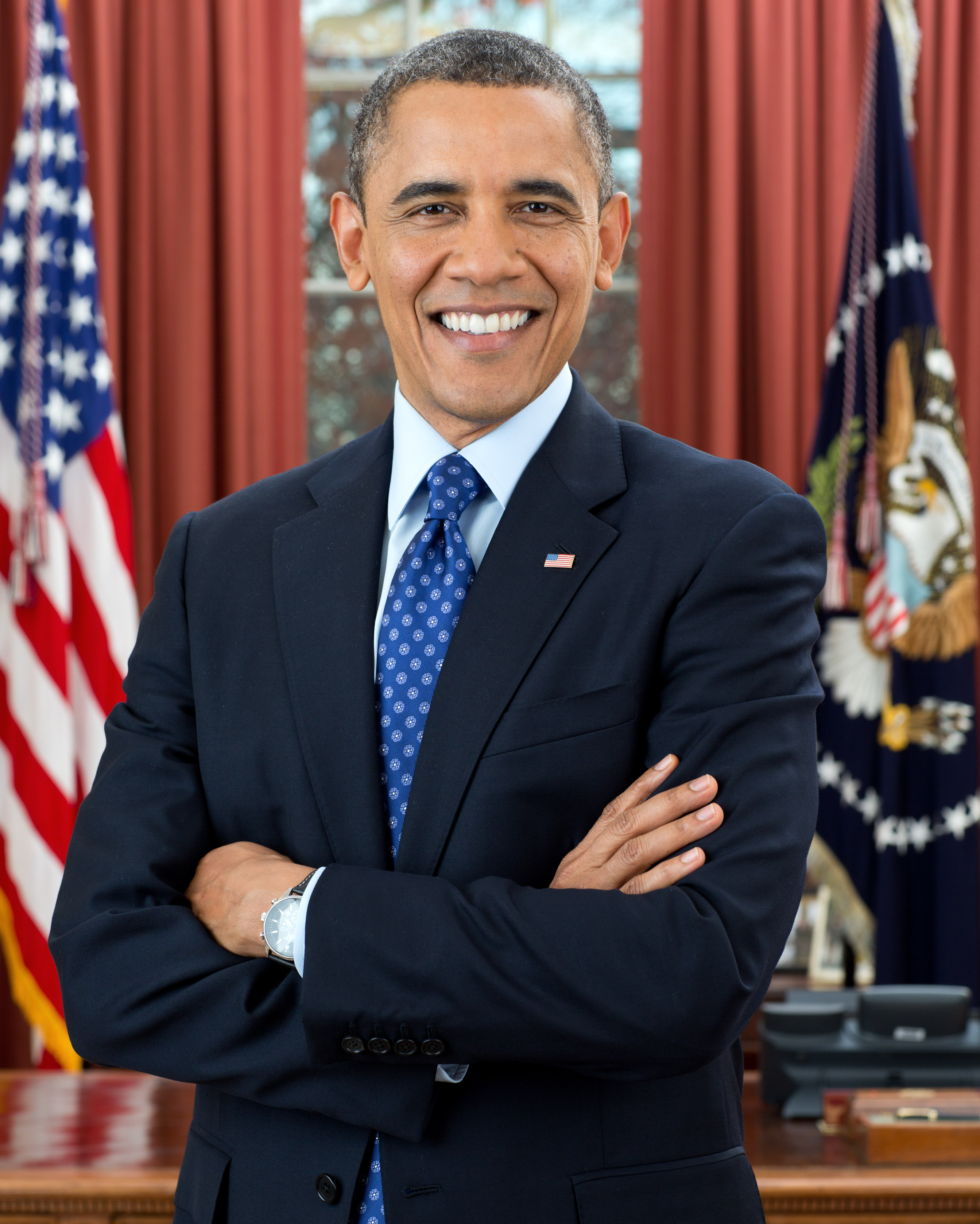
44th President • 2009–2017
Barack Obama
Barack Obama entered the White House during a severe financial crisis, promising economic recovery and a less divided political culture. His administration expanded health insurance coverage, strengthened financial regulation, and pursued international agreements on nuclear security and climate change. Yet prolonged conflicts, disputes over executive authority, and deepening political divisions complicated his promise of change.

At a Glance
Quick Facts
| Born | August 4, 1961, in Honolulu, Hawaii |
|---|---|
| Presidency | January 20, 2009–January 20, 2017 |
| Political party | Democratic |
| Vice president | Joe Biden |
| First lady | Michelle Obama |
| Predecessor | George W. Bush |
| Successor | Donald Trump |
Why He Matters
A Historic Election and an Ambitious Presidency
Obama’s election demonstrated how profoundly American political life had changed since the era of legally enforced racial segregation. His rise carried significance beyond any individual policy, expanding the nation’s understanding of who could occupy its highest office.
His governing record centered on a larger federal role in healthcare, economic stabilization, and consumer protection. Supporters saw necessary responses to national problems. Critics questioned their costs, effectiveness, and implications for limited government.
His presidency raises an enduring question: how can a president pursue substantial reform while maintaining public trust across a deeply divided republic?
The Road to the Presidency
From Community Organizing to National Leadership
Born in Hawaii to a Kenyan father and an American mother, Obama spent parts of his childhood in Indonesia before returning to Hawaii.
He graduated from Columbia University and worked as a community organizer in Chicago. At Harvard Law School, he became the first African American president of the Harvard Law Review. He later practiced civil rights law and taught constitutional law at the University of Chicago.
Obama served in the Illinois Senate before winning election to the United States Senate in 2004. His address at that year’s Democratic National Convention introduced him to a national audience.
In 2008, he defeated Hillary Clinton for the Democratic presidential nomination and Republican John McCain in the general election. He won reelection against Mitt Romney in 2012.
America He Inherited
Financial Crisis and Unfinished Wars
Obama took office as the country confronted collapsing home values, financial instability, and mounting job losses. Emergency federal intervention had begun under George W. Bush, but the economic damage continued into the new administration.
Overseas, American forces remained engaged in Iraq and Afghanistan. The new president faced pressure to reduce military commitments while preventing terrorist organizations from rebuilding.
The recession officially ended in June 2009, but recovery was slow and uneven. For many households, economic insecurity outlasted the financial emergency.
Defining Decisions
Six Tests of Obama’s Leadership
The Economic Recovery Act
Obama signed the American Recovery and Reinvestment Act in 2009. It combined tax relief, infrastructure investment, aid to states, and other spending intended to support employment and demand.
Supporters considered it essential to limiting the downturn. Critics questioned its cost, design, and the effectiveness of particular expenditures.
The Affordable Care Act
Signed in March 2010, the Affordable Care Act became Obama’s defining domestic achievement. It expanded insurance coverage through subsidized marketplaces and Medicaid expansion, while establishing protections for people with preexisting conditions.
The law also produced disputes over mandates, premiums, federal spending, and the balance between government requirements and individual choice.
Financial Regulation
The Dodd–Frank Act of 2010 expanded financial oversight and created the Consumer Financial Protection Bureau. Its purpose was to reduce systemic risks and strengthen consumer protections after the financial crisis.
Critics argued that some requirements imposed excessive burdens, particularly on smaller financial institutions.
The Operation Against Osama bin Laden
Obama authorized the operation that killed al-Qaeda leader Osama bin Laden in Pakistan in May 2011. It represented a major counterterrorism success, although it did not end the wider threat from extremist organizations.
The Iran Nuclear Agreement
In 2015, the United States and international partners reached an agreement restricting Iran’s nuclear activities in exchange for sanctions relief.
Supporters emphasized inspections and limits on enrichment. Opponents questioned the duration of restrictions, enforcement, and the agreement’s failure to resolve Iran’s broader regional conduct.
The Paris Climate Agreement
Obama helped secure the 2015 Paris Agreement, establishing an international framework for national commitments to address climate change.
Supporters praised cooperation on a global problem. Critics questioned its effectiveness, economic implications, and reliance on commitments that could change with national leadership.


Constitution & Power
Reform, Gridlock, and Executive Action
Obama’s early legislative achievements depended on Democratic congressional majorities. After Republicans gained control of the House, major policy disputes increasingly involved executive action, agency regulation, and litigation.
Immigration illustrated this tension. His administration established Deferred Action for Childhood Arrivals, or DACA, offering qualifying immigrants brought to the country as children temporary protection from removal and eligibility for work authorization.
Supporters viewed the policy as a reasonable exercise of enforcement discretion. Critics argued that it approached a change in immigration law that required congressional approval.
Presidential appointments also produced a constitutional confrontation. In NLRB v. Noel Canning in 2014, the Supreme Court unanimously rejected particular recess appointments Obama made while the Senate was holding brief sessions.
Economy
Recovery Without Universal Confidence
The economy returned to growth during Obama’s presidency, and unemployment declined substantially from its recession-era peak.
Federal Reserve policy, emergency measures begun under Bush, congressional legislation, private investment, and broader economic developments all influenced the recovery. Presidential policy mattered, but the White House did not control the process alone.
The recovery’s pace and distribution remained contentious. Many Americans continued to face financial insecurity, and improvements in national indicators did not translate into equal gains across communities.
Obama left office with an economy substantially stronger than the one he inherited, alongside unresolved concerns about opportunity, wages, and economic inequality.
War & Foreign Policy
Diplomacy Alongside Continuing Military Commitments


Iraq and Afghanistan
Obama oversaw the withdrawal of American forces from Iraq in 2011 under an agreement negotiated during the Bush administration. American forces returned in 2014 as part of the campaign against the Islamic State.
In Afghanistan, he initially increased troop levels before reducing them. The war remained unresolved when he left office.
Libya
In 2011, the United States participated in a NATO intervention after the United Nations authorized measures to protect civilians. Muammar Qaddafi’s government fell, but Libya subsequently experienced prolonged instability.
The intervention exposed a familiar problem: military success does not guarantee a workable political settlement.
Syria and the Islamic State
Syria’s civil war presented competing dangers involving civilian suffering, chemical weapons, extremist groups, and possible confrontation with other powers. Obama’s response drew criticism both from those seeking stronger intervention and those concerned about another expansive war.
Diplomatic Engagement
Obama pursued the Iran nuclear agreement and restored diplomatic relations with Cuba in 2015. Both initiatives reflected his belief that engagement could advance American interests, although their benefits and durability remained disputed.
Controversies & Accountability
Security, Transparency, and Public Trust
Obama expanded the use of drone strikes against suspected terrorists. These operations raised serious questions about civilian casualties, secrecy, and the legal standards governing targeted killing, including the killing of an American citizen abroad.
His administration also faced criticism over surveillance programs, its treatment of government leaks, and its failure to fulfill his promise to close the detention facility at Guantánamo Bay.
The troubled launch of HealthCare.gov damaged confidence in the implementation of his signature law. His assurances that people could keep existing insurance plans also proved inaccurate for some policyholders.
Domestic Policy & Society
Expanded Rights and Continuing Disagreement
Obama signed the repeal of “Don’t Ask, Don’t Tell,” allowing gay and lesbian service members to serve openly. He later supported same-sex marriage, which the Supreme Court recognized as a nationwide constitutional right in 2015.
His administration also pursued changes in education, environmental protection, and criminal justice. These efforts reflected a broader commitment to expanding opportunity, but they frequently generated disagreement over federal authority and social policy.
His presidency did not overcome America’s racial or partisan divisions. Evaluating that outcome requires recognizing both the limits of presidential influence and the consequences of presidential choices.
Faith & Character
Christian Belief and Moral Disagreement
Obama identified as a Christian and frequently discussed faith in terms of service, responsibility, and concern for vulnerable people.
His political strengths included disciplined communication, intellectual confidence, and an ability to connect personal experience with national ideals. Critics sometimes found his leadership detached or insufficiently attentive to opposing concerns.
His positions on abortion rights and disputes over contraceptive coverage placed him at odds with Catholic teaching and other religious constituencies. Those conflicts raised enduring questions about religious liberty, healthcare policy, and the protection of conscience.
A fair assessment examines both his stated commitment to religious freedom and the effects of policies that religious institutions challenged.
Legacy & Assessment
Lasting Reform and the Limits of Presidential Change
Obama’s presidency left durable changes in healthcare, financial oversight, and American political representation.
His administration helped manage recovery from a severe economic crisis and achieved important diplomatic and counterterrorism successes. Yet foreign interventions, executive-power disputes, and failures of implementation complicate his record.
Presidents Republic assessment: Obama combined historic significance with substantial policy achievements. His presidency also demonstrates that eloquence and electoral victory cannot substitute for lasting consensus, effective administration, or constitutional restraint.
His legacy asks Americans to consider how meaningful reform can endure across changes in party control—and how presidents can pursue change while preserving the trust and institutions of the republic.
Sources & Further Reading
Explore the Historical Record
- Barack Obama Presidential Library: Biography
- Barack Obama Presidential Library: Timeline
- Federal Reserve History: The Great Recession and Its Aftermath
- Federal Reserve: February 2017 Monetary Policy Report
- National Labor Relations Board: Noel Canning Decision
- Archived Obama White House: Administration Foreign Policy Record