32nd President • 1933–1945
Franklin D. Roosevelt
Roosevelt confronted economic collapse and global war, reshaped the federal government through the New Deal, and helped lead the Allied struggle against the Axis. His presidency combined extraordinary political leadership with enduring disputes over constitutional limits and civil liberties.


Why He Matters
The President Who Redefined Washington’s Role
Economic Security
The New Deal made federal responsibility for economic distress a central feature of American political life.
Allied Leadership
Roosevelt helped organize the coalition and industrial effort that fought Nazi Germany, Fascist Italy, and Imperial Japan.
Executive Power
Economic emergency and wartime administration enlarged the reach of the presidency and federal agencies.
Liberty Under Pressure
His record forces a difficult judgment: national leadership can achieve great things while also committing profound injustices.
The Road to the Presidency
From Hyde Park to a Nation in Crisis
Born in Hyde Park, New York, Roosevelt attended Groton and Harvard, studied law at Columbia, and married Eleanor Roosevelt in 1905.
He entered the New York Senate, served as assistant secretary of the Navy, and ran unsuccessfully for vice president on the Democratic ticket in 1920.
A paralytic illness diagnosed as polio left him unable to walk unaided. Years of rehabilitation preceded his political comeback.
Elected governor of New York in 1928 and reelected in 1930, Roosevelt gained executive experience as the Depression deepened.
He defeated Herbert Hoover, promising a New Deal to a country struggling with unemployment and bank failures.
Defining Decisions
Six Tests of Roosevelt’s Leadership
Restoring Banking Confidence
A nationwide banking holiday and emergency legislation aimed to stop financial panic and reopen viable banks.
Signing Social Security
Roosevelt approved old-age insurance, unemployment compensation, and assistance programs with lasting national consequences.
Trying to Expand the Court
He proposed additional Supreme Court seats after judicial defeats threatened New Deal legislation. Congress rejected the plan.
Supporting Lend-Lease
Military aid to nations resisting the Axis widened American involvement before formal entry into the war.
Signing Executive Order 9066
Authorization of military exclusion zones led to mass removal and incarceration of people of Japanese ancestry.
Preparing for Veterans’ Return
The GI Bill offered education, unemployment, and housing support as the country planned for life after the war.
Constitution & Power
Emergency Government and Constitutional Restraint
Roosevelt changed the scale of federal action.
His presidency placed Washington at the center of economic recovery and wartime mobilization. The constitutional question was whether the institutions authorizing that action could also restrain it.
In 1937, Roosevelt proposed adding a justice for each sitting Supreme Court justice over 70, with as many as six additional seats. The plan would have shifted the Court’s balance after it invalidated major New Deal measures.
Congress did not enact the proposal. Although the Court subsequently upheld important economic regulations, scholars dispute whether its shift resulted from Roosevelt’s pressure.
The continuing debate: Electoral support gives presidents political authority to pursue legislation. It does not remove the need for an independent judiciary or turn emergency into unlimited power.
The New Deal
Relief, Recovery, and Reform
When Roosevelt took office in March 1933, unemployment approached 25 percent. Families faced foreclosure and hunger while failing banks threatened savings.
His first hundred days brought emergency legislation and new agencies. The Civilian Conservation Corps employed young men on conservation projects. The Works Progress Administration later funded construction and cultural work. The Tennessee Valley Authority combined power development with regional economic improvement.
These programs supplied jobs and assistance while establishing a more active federal presence in everyday life.
Economic Security
Social Security and the Rules of the Market
Protecting Depositors
Federal deposit insurance addressed the danger that a bank failure could wipe out ordinary Americans’ savings.
Separating Banking Activities
The Glass-Steagall Act separated commercial banking from investment banking, seeking to reduce financial risk.
Social Security
Signed on August 14, the Social Security Act created old-age insurance, unemployment compensation, and several assistance programs.
Collective Bargaining
The Wagner Act protected workers’ rights to organize and bargain collectively and established the National Labor Relations Board.
Source: FDR Presidential Library: Banking Crisis.
Source: Social Security Administration: Historical Background.
Source: Miller Center: Domestic Affairs.
Economy
Recovery With Serious Limits
The New Deal helped relieve suffering and stabilize institutions, but recovery remained incomplete. A renewed recession in 1937 showed how fragile the economy still was. Wartime demand and production eventually brought a far larger expansion.
Benefits were uneven. The original Social Security system excluded agricultural and domestic workers from old-age insurance, disproportionately affecting Black workers. Industrial recovery codes also drew complaints that large businesses dominated the process.
The economic judgment: Providing emergency help, improving institutions, and restoring full employment are different measures of success. Roosevelt’s record should be assessed against all three.
Source: FDR Presidential Library: Great Depression Facts.
Source: Miller Center: Domestic Affairs.
World War II
From Aid to the Allies to Global War
Roosevelt signed Lend-Lease in March 1941 to supply nations fighting the Axis. The United States entered the war after Japan attacked Pearl Harbor on December 7 and Germany and Italy declared war four days later.
He worked with military advisers and Allied leaders on strategy, while American factories and workers sustained a vast mobilization. His administration’s priorities included defeating Germany while continuing the fight in the Pacific.
Source: FDR Presidential Library: Biography.
War & Foreign Policy
Yalta and the Shape of the Peace
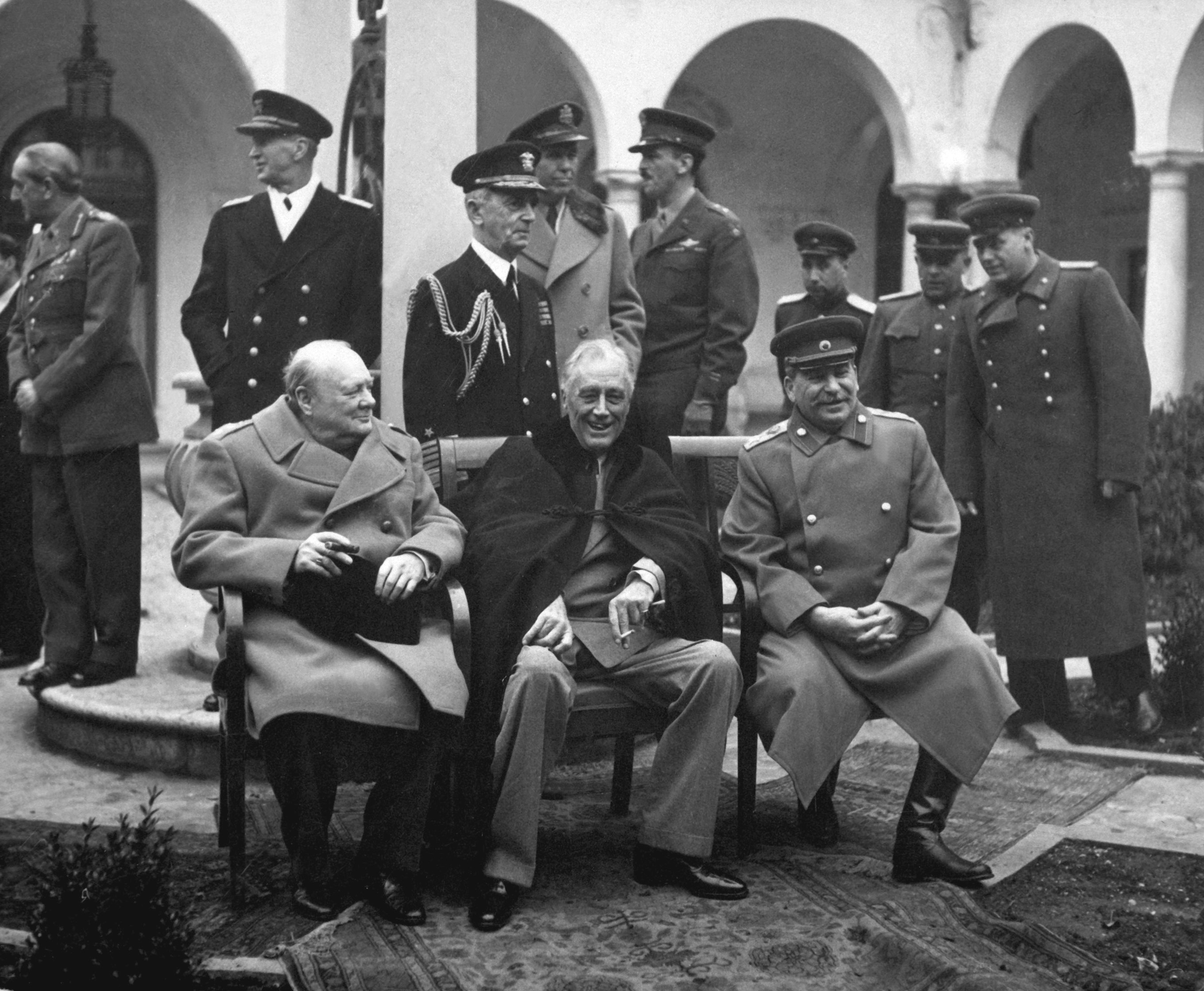
At Yalta in February 1945, Roosevelt, Winston Churchill, and Joseph Stalin discussed Germany, Eastern Europe, Soviet participation against Japan, and the proposed United Nations.
The agreements included arrangements for Germany’s occupation and Security Council voting. The Soviet pledge to permit free elections in liberated territories stood in tension with its growing power in Eastern Europe. The conference became a lasting source of controversy over Roosevelt’s diplomacy.
Source: U.S. Department of State: The Yalta Conference.

Civil Liberties
Japanese American Incarceration
Executive Order 9066, signed on February 19, 1942, authorized military exclusion areas. Its implementation uprooted approximately 122,000 people of Japanese ancestry, including nearly 70,000 American citizens.
People were confined without individual charges. Families lost freedom, homes, and property. In 1988, the federal government acknowledged the injustice, apologized, and provided compensation to eligible survivors.
The civil-liberties judgment: This was a grave injustice. A full assessment of Roosevelt must confront the harm his administration inflicted on people whose ancestry was treated as evidence of danger.
Humanitarian Responsibility
The Holocaust and the Limits of Rescue
Roosevelt prioritized economic recovery and military victory. His administration did not seek a broad expansion of immigration quotas as persecution of European Jews intensified, and obstacles within the government restricted rescue efforts.
In January 1944, he established the War Refugee Board after pressure from Treasury officials and others. It undertook rescue and relief work that saved lives, but came late in the catastrophe.
The moral question: Defeating Nazi Germany was essential. Historians also ask what more the United States could have done earlier to admit refugees and assist those facing persecution.
Source: U.S. Holocaust Memorial Museum: Franklin D. Roosevelt.
Faith & Character
Resilience, Public Prayer, and Responsibility
An Episcopalian President
Roosevelt belonged to the Episcopal tradition. Religious language was part of his public expression of national purpose.
Living With Disability
His return to public life after paralysis demonstrated persistence. Physical limitations did not prevent him from holding the presidency.
Speaking to the Nation
His radio addresses made presidential leadership feel personal, explaining policy and reassuring listeners during uncertainty.
The D-Day Prayer
On the evening of the Normandy invasion, Roosevelt invited Americans to join him in prayer for troops and their families.
“Lead them straight and true; give strength to their arms, stoutness to their hearts, steadfastness in their faith.” Franklin D. Roosevelt • D-Day Prayer • June 6, 1944
Source: Miller Center: Franklin D. Roosevelt.
Preparing for Peace
The GI Bill and a Future Beyond War
Roosevelt signed the Servicemen’s Readjustment Act on June 22, 1944. The GI Bill provided education and training benefits, unemployment support, and loan guarantees to help veterans return to civilian life.
Its influence reached far beyond the battlefield, widening access to college and homeownership. Yet discrimination limited many Black veterans’ access to housing and other opportunities.
Presidential Scorecard
Roosevelt’s Record
These assessments are editorial judgments based on the record discussed above.
Expanded and Contested
Economic and military emergencies increased federal reach; the court-packing fight exposed the importance of institutional restraint.
Transformative
His administration established an enduring expectation of active presidential leadership in national crises.
Lasting Reform, Uneven Recovery
Banking protections and social insurance endured, while the Depression persisted through the 1930s.
Consequential and Debated
Allied cooperation helped defeat the Axis, while Yalta left unresolved tensions about the postwar order.
Highly Effective
He won four presidential elections and sustained broad public support through depression and war.
Great Achievements, Grave Failures
Wartime leadership must be weighed alongside Japanese American incarceration and limits on refugee rescue.
Death in Office
Victory Approached Without Its Wartime President
Roosevelt died of a cerebral hemorrhage at Warm Springs, Georgia, on April 12, 1945. He was 63. Harry S. Truman became president as the war continued.
Roosevelt did not live to see Germany’s surrender or the end of the Pacific war. His successor inherited both the work of completing victory and the challenge of building the peace.
Source: FDR Presidential Library: Biography.
Lasting Legacy
Government’s Capacity and Liberty’s Safeguards
Roosevelt’s presidency changed the relationship between Americans and their government. Social insurance, financial safeguards, and national crisis leadership became enduring parts of public life.
His record also shows why effectiveness alone cannot define presidential greatness. A republic must ask how power is exercised, whose rights are protected, and who bears the cost of national decisions.
Final assessment
Franklin D. Roosevelt helped the United States confront economic collapse and global war while permanently enlarging the role of the federal government. His achievements were substantial. So were his failures. Understanding both is essential to judging presidential leadership under emergency.
Sources & Further Reading
Trace the Evidence
- FDR Presidential Library: Roosevelt Biography
- Miller Center: Franklin D. Roosevelt
- Miller Center: Life Before the Presidency
- FDR Presidential Library: Great Depression Facts
- FDR Presidential Library: Banking Crisis
- Miller Center: Domestic Affairs
- Social Security Administration: Historical Background
- Federal Judicial Center: Court-Packing Plan
- U.S. Department of State: The Yalta Conference
- National Archives: Executive Order 9066
- U.S. Holocaust Memorial Museum: Roosevelt
- American Presidency Project: D-Day Prayer
- National Archives: GI Bill