7th President • 1829–1837
Andrew Jackson
A frontier soldier and political insurgent transformed the presidency into a direct instrument of popular power. He defended the Union, shattered the national bank, built the Democratic Party—and drove a policy of Native removal whose human cost permanently darkens his legacy.

Why He Matters
The President Who Made the Office Popular
Jackson claimed a direct political bond with the people and treated the president—not Congress—as the only national official elected by the whole country. That argument helped create the modern, forceful presidency.
The Rise of Mass Democracy
Jackson’s campaigns mobilized voters through rallies, newspapers, party organization, and a powerful outsider narrative. His coalition became the Democratic Party and helped establish the enduring two-party system.
A Stronger Presidency
Earlier presidents usually treated the veto as a constitutional safeguard. Jackson used it to reject policy on political and economic grounds, asserting that the president could independently judge what served the public good.
Defender of the Union
When South Carolina claimed the power to nullify federal tariffs, Jackson rejected secessionist logic and threatened enforcement. He paired firmness with a negotiated tariff that allowed the crisis to recede without war.
Removal and Dispossession
Jackson made Indian removal a central administration policy. Treaties, coercion, state pressure, and federal power drove Native nations westward, setting the machinery in motion for the Trail of Tears.
The Road to the Presidency
From the Carolina Backcountry to National Hero
During the Revolution, teenage Jackson served as a courier, was captured by the British, and carried scars from an officer’s sword after refusing to polish the officer’s boots. His mother and brothers died during the war.
After moving to Tennessee and becoming a lawyer and land speculator, Jackson served briefly in the U.S. House and Senate and then as a Tennessee judge.
As a militia general, he defeated the Red Stick Creeks at Horseshoe Bend. The resulting treaty forced a massive cession of Creek land, including territory belonging to some Native allies of the United States.
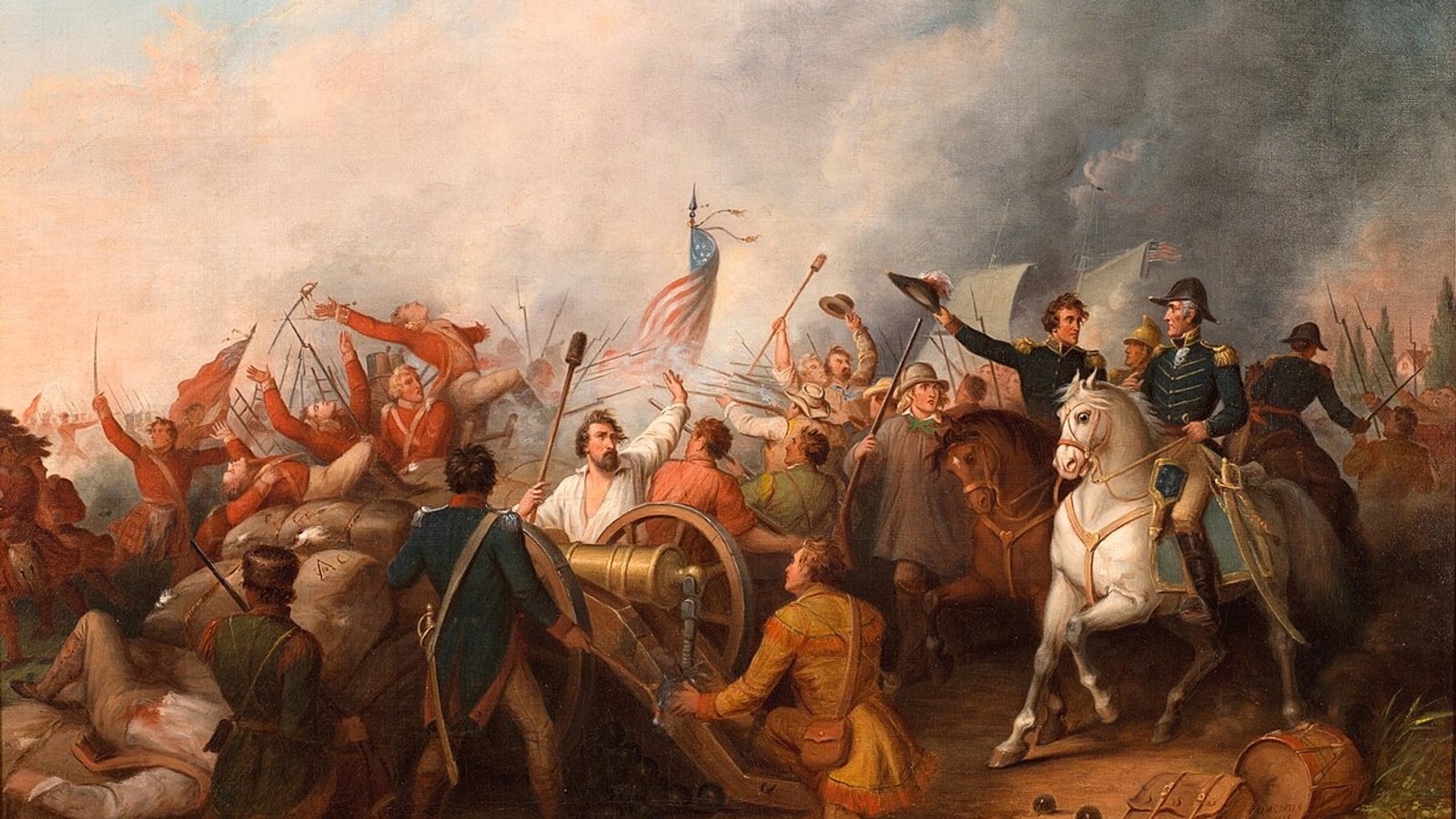
His victory over British forces at the Battle of New Orleans made “Old Hickory” a national hero and symbol of American resilience after the War of 1812.
Jackson invaded Spanish Florida during the First Seminole War. The campaign produced fierce constitutional and diplomatic controversy, yet it strengthened pressure on Spain to transfer Florida to the United States.
Jackson won a plurality in 1824 but lost the House contingent election to John Quincy Adams. His supporters denounced a “corrupt bargain,” organized a national movement, and defeated Adams decisively in 1828.
Defining Decisions
Six Tests of Jackson’s Leadership
Signing the Indian Removal Act
The act authorized land exchanges and federal support for removal west of the Mississippi. Jackson presented removal as voluntary protection from state pressure, but the policy operated through unequal bargaining, coercive treaties, military force, and the denial of Native peoples’ right to remain in their homelands.
Vetoing the National Bank
Jackson rejected the early renewal of the Second Bank’s charter. He attacked its concentrated financial privilege, foreign investment, and distance from democratic control. The veto message also asserted a broad presidential right to interpret the Constitution independently.
Confronting Nullification
South Carolina declared federal tariffs null within the state. Jackson issued a proclamation rejecting the state’s theory, supported the Force Bill, and prepared to enforce federal law. At the same time, Henry Clay’s compromise tariff gave both sides a path away from violence.
Removing Federal Deposits
After winning reelection, Jackson ordered federal funds removed from the Bank of the United States and placed in selected state banks. The Senate censured him for assuming authority it believed belonged to Congress; allies later expunged the censure.
Expanding Patronage
Jackson defended rotation in office as democratic reform, but appointments increasingly rewarded political loyalty. The developing “spoils system” helped discipline the new party while blurring the line between public service and partisan organization.
Issuing the Specie Circular
To restrain land speculation, the administration required payment for federal land largely in gold or silver. Combined with bank instability, credit contraction, and international forces, the policy contributed to conditions surrounding the Panic of 1837.


Constitution & Power
The President as the People’s Representative
Jackson did not merely use presidential power more aggressively—he supplied it with a new democratic justification.
Jackson argued that the president possessed an independent mandate from the people. He used the veto as a policy weapon, removed executive officers, redirected federal deposits, appealed directly to public opinion, and offered his own constitutional judgments rather than simply deferring to Congress or the courts. This strengthened the presidency as a political institution and weakened the older assumption that Congress naturally stood at the center of national government.
“The Constitution of the United States forms a government, not a league.”Andrew Jackson • Proclamation Regarding Nullification, 1832
The constitutional tension: Jackson could defend federal supremacy against South Carolina while resisting federal protection for Native nations against state encroachment. His nationalism was powerful but selective: he vigorously enforced the Union when state resistance threatened federal authority, yet his administration would not protect Cherokee sovereignty with the same determination.
Indian Removal
The Irreversible Moral Failure
No assessment of Jackson can treat removal as a footnote. It was a major purpose of his presidency and altered the lives, lands, and political future of entire Native nations.
The Cherokee, Creek, Choctaw, Chickasaw, and Seminole peoples faced intense pressure from southern states and white settlers who wanted their land. Jackson supported removal as the answer. Although his administration used the language of exchange and consent, the balance of power was profoundly unequal, and resistance was met by legal pressure, fraudulent or contested agreements, and force.
In Worcester v. Georgia (1832), the Supreme Court rejected Georgia’s attempt to impose its laws within Cherokee territory. The often-repeated quotation claiming Jackson openly defied Chief Justice John Marshall is not securely documented. What is clear is that Jackson’s administration did not use federal power to secure the Cherokee position against Georgia.
The largest Cherokee removals occurred under Martin Van Buren in 1838–1839, after Jackson left office. That timing does not absolve Jackson. His administration championed the policy, negotiated and enforced removals, recognized the disputed Treaty of New Echota, and created the conditions that led to the Cherokee Trail of Tears.
Historical responsibility: The fact that the deadliest Cherokee march took place under Jackson’s successor changes the chronology, not the origin or ownership of the policy.
Faith & Character
Providence, Violence, Loyalty, and Contradiction
A Language of Providence
Jackson frequently spoke of Providence and understood national events through a religious and moral vocabulary common to his age. His wife, Rachel, was deeply religious, and her death shortly before his inauguration devastated him.
A Late Presbyterian Commitment
Jackson attended Presbyterian worship and became more openly devout in retirement. He formally joined the Presbyterian Church and was baptized in 1838, several years after leaving the presidency.
Personal Courage and Fierce Loyalty
Jackson inspired extraordinary devotion. He endured wounds, illness, political attacks, and military danger with unusual resolve. Yet the same honor culture fed rage, feuds, threats, and duels—including the duel in which he killed Charles Dickinson.
Faith Beside Enslavement
Jackson was a slaveholder whose plantation wealth depended on enslaved labor. He bought and sold enslaved people and supported a social and political order that denied them liberty. His religious profession must be examined alongside that grave contradiction.
Economy & Government
Destroying Privilege—or Destabilizing Finance?
Jackson regarded the Second Bank of the United States as a dangerous union of government power and private wealth. Its president, Nicholas Biddle, exercised immense financial influence, and the institution’s structure gave Jackson a credible basis for attacking concentrated privilege. His veto spoke to voters who believed the economic system favored connected elites.
But dismantling the Bank did not produce a stable alternative. Federal deposits flowed to selected state banks, lending expanded, land speculation surged, and the Specie Circular tightened payment rules. The Panic of 1837 began as Jackson left office. No single policy caused it, but the Bank War and its aftermath weakened financial stability and intensified the downturn inherited by Van Buren.
The economic verdict
Jackson identified a real problem—concentrated financial power with public privileges—but answered it by destroying an institution without constructing an equally capable replacement. The political victory was clearer than the economic success.
Presidential Scorecard
Jackson’s Record
Nationalist and Selective
Defended federal supremacy during nullification but failed to protect Native sovereignty from state power.
Transformational
Expanded the veto, popular leadership, removal authority, and presidential control over administration.
Disruptive
Defeated the national bank but left a fragmented and unstable financial landscape.
Resolute
Rejected nullification and asserted that no state could unilaterally dissolve the constitutional order.
Dominant
Built a durable party, mobilized mass participation, and reshaped national political communication.
Deeply Damaged
Indian removal and lifelong slaveholding impose an enduring judgment on his democratic claims.
Lasting Legacy
The Founder of the Modern Popular Presidency
Jackson changed how Americans understood the presidency. He made the office personal, partisan, national, and popular. Later presidents of very different ideologies inherited his methods: direct appeals to voters, aggressive use of constitutional powers, disciplined party leadership, and the claim that the president speaks for the nation as a whole.
His appeal was rooted in genuine democratic change, but Jacksonian democracy remained sharply bounded. Political participation widened primarily for white men while Native peoples were dispossessed and enslaved people remained outside the nation’s promise of liberty. The contradiction was not incidental to the era; it was embedded in its expansion.
Final assessment
Andrew Jackson was one of the most consequential—and morally troubling—presidents in American history. He defended the Union and broadened democratic political participation, but he also personalized executive power, destabilized national finance, rewarded partisanship, and made federal removal policy an engine of Native dispossession. His presidency enlarged both the power of the people and the power exercised in their name.
Sources & Further Reading
Trace the Evidence
- Miller Center: Andrew Jackson
- White House Historical Biography: Andrew Jackson
- Library of Congress: Andrew Jackson Papers
- United States Senate: Andrew Jackson and the Bank War
- National Archives: Jackson’s Message on Indian Removal
- National Park Service: Trail of Tears History
- Avalon Project: Jackson’s Nullification Proclamation
- Avalon Project: Bank Veto Message
- The Hermitage: Life of Andrew Jackson