12th President • 1849–1850
Zachary Taylor
The celebrated soldier known as “Old Rough and Ready” entered office without political experience and confronted the most dangerous question of his age: whether slavery would expand into the West. A Southern slaveholder who resisted sectional pressure, Taylor placed preservation of the Union above party—and died before his policy could be fully tested.

Why He Matters
The Soldier-President at a Sectional Crossroads
Taylor served only sixteen months, but his response to California, New Mexico, Texas, and secession placed him at the center of the conflict that would eventually produce civil war.
Old Rough and Ready
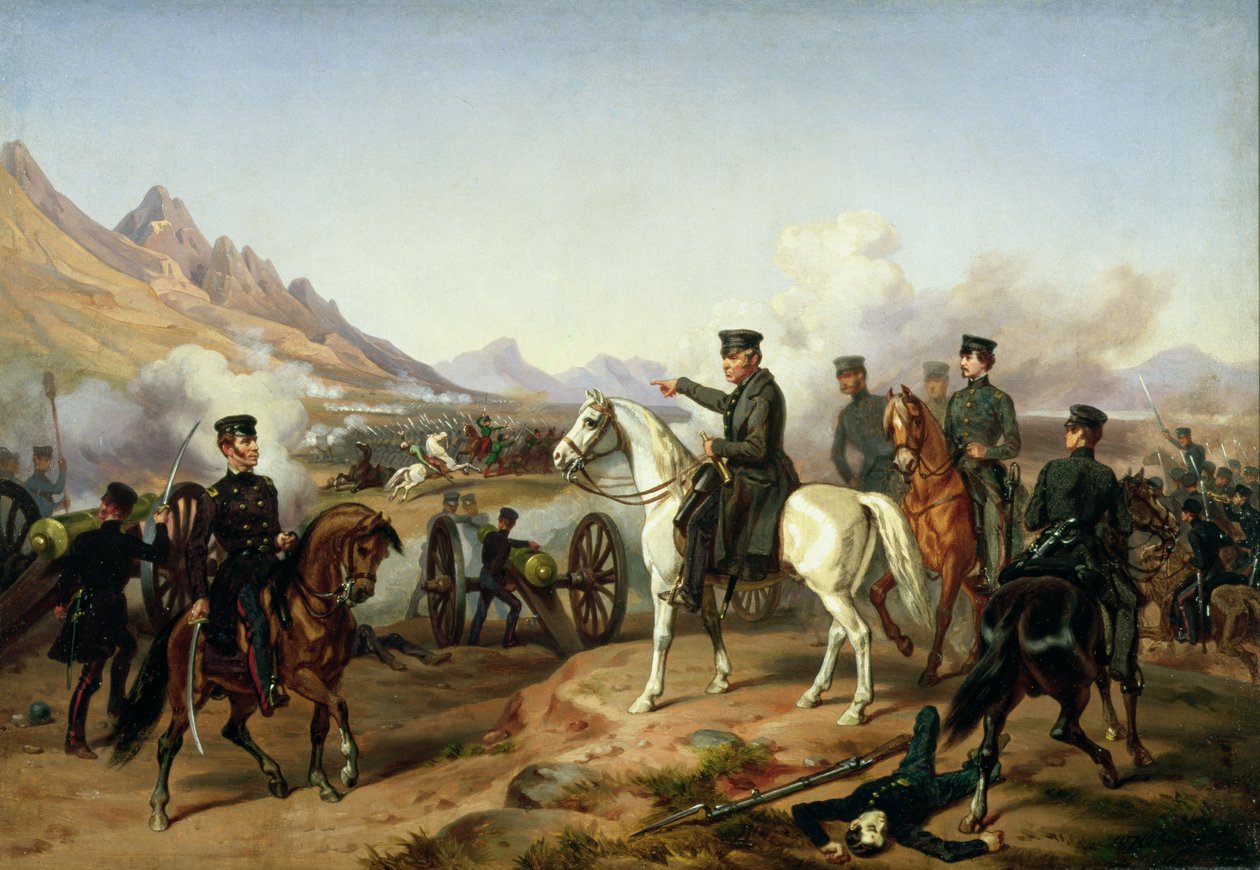
Four decades of Army service and victory at Buena Vista made Taylor a symbol of courage, simplicity, and national honor.
A Political Outsider
He reached the presidency without holding prior elected office and refused to become merely an instrument of Whig leaders in Congress.
Resisting Slavery’s Expansion
Although a slaveholder, Taylor supported rapid statehood for California and New Mexico, where slavery was unlikely to be permitted.
Union Before Section
He rejected secession and appeared prepared to use federal force if Texas attempted to seize disputed New Mexican territory.
The Road to the Presidency
Forty Years in Uniform
Taylor entered the United States Army as a first lieutenant.
His defense of Fort Harrison during the War of 1812 brought early national recognition.
He served in the Black Hawk War and Second Seminole War, earning the nickname “Old Rough and Ready.”
Victories at Palo Alto, Resaca de la Palma, and Monterrey made him a leading figure in the Mexican–American War.
At Buena Vista, Taylor’s smaller army resisted a larger Mexican force under Santa Anna and turned him into a national hero.
The Whigs nominated Taylor as a broadly popular military candidate. He defeated Lewis Cass and Martin Van Buren.
Defining Decisions
Six Tests of Taylor’s Leadership
Supporting California Statehood
Taylor encouraged California to seek immediate admission under its antislavery constitution rather than wait through a territorial period.
Encouraging New Mexico
He urged New Mexico to organize a state government, allowing residents to settle slavery through their own constitution.
Opposing the Omnibus Compromise
Taylor resisted Henry Clay’s package and preferred admitting California and New Mexico without concessions extracted through sectional threats.
Defending Federal Territory
When Texas threatened to enforce its claim over New Mexico, Taylor insisted that federal authority would protect the disputed region.
Rejecting Secession
He treated disunion as rebellion rather than a constitutional remedy and appeared willing to enforce federal law militarily.
Signing the Clayton–Bulwer Treaty
The United States and Britain agreed that neither would obtain exclusive control of a future Central American canal.

Constitution & Power
A Restrained Presidency Prepared to Defend the Union
Taylor generally respected congressional leadership in legislation, but he did not believe states could defy federal authority or leave the Union at will.
His position combined Whig restraint with military nationalism. He did not seek to dominate Congress’s domestic agenda, yet he considered enforcement of federal law and defense of federal territory essential presidential duties.
“The Executive has authority to recommend, not to approve, the measures which Congress may pass.”Zachary Taylor • Annual Message to Congress, 1849
The constitutional tension: Taylor’s willingness to use force against resistance from Texas anticipated the later question Abraham Lincoln would face: whether the president must treat attempted secession as political negotiation or rebellion against constitutional government.
California, New Mexico & Slavery
A Slaveholder Who Opposed Slavery’s Western Expansion
The territory acquired under James K. Polk forced Congress to decide whether slavery could move west. Taylor proposed that California and New Mexico skip the territorial stage, write constitutions, and apply directly for statehood.
The proposal sounded neutral, but California had already prohibited slavery and New Mexico was unlikely to establish a plantation system. Southern leaders feared the loss of political balance in the Senate and demanded federal protection for slaveholding in the territories.
Taylor was not an abolitionist. He owned plantations and enslaved more than one hundred people over his lifetime. His opposition to expansion came primarily from nationalism and his belief that prolonged territorial controversy endangered the Union.
The moral judgment: Taylor deserves credit for resisting the political expansion of slavery, but that resistance cannot erase his personal participation in an institution that denied liberty to those he enslaved.
The Compromise of 1850
The Settlement Taylor Did Not Live to Decide
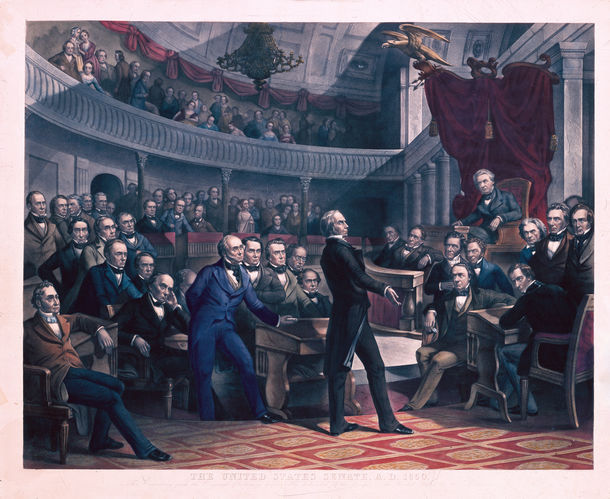
Henry Clay proposed admitting California as a free state, organizing Utah and New Mexico without immediately prohibiting slavery, settling the Texas boundary, compensating Texas, ending the slave trade in Washington, D.C., and strengthening the fugitive-slave law.
Taylor opposed tying California’s admission to an omnibus bargain. He believed the federal government should act directly and refuse to reward threats of secession. His sudden death removed a major obstacle to Clay’s approach.
Millard Fillmore supported compromise. Congress divided the package into separate bills, creating a temporary political peace while the new Fugitive Slave Act intensified Northern resistance.
The unanswered question
Would Taylor’s firmness have contained sectional extremism, or driven the country toward confrontation sooner? His brief presidency ended before either possibility could be tested.
Faith & Character
Courage, Simplicity, and Contradiction
Religious Formation
Taylor was raised within Virginia’s Anglican and Episcopal culture. His public identity emphasized providence, duty, and national service more than theological argument.
Personal Courage
Decades of frontier command made Taylor calm in danger and deeply respected by soldiers who saw him share their hardships.
Political Independence
His lack of party experience could be a weakness, but it also allowed him to oppose Whig leaders and Southern sectional demands.
Slaveholding
Taylor’s ownership of enslaved people stands in grave conflict with the liberty and union he claimed to defend.
Sudden Death
Sixteen Months in Office
After attending July Fourth ceremonies at the Washington Monument in extreme heat, Taylor became severely ill. Contemporary physicians diagnosed an intestinal disease known as cholera morbus. He died on July 9, 1850.
Later rumors alleged poisoning because Taylor’s death changed the course of the compromise debate. His remains were exhumed in 1991, but testing found no evidence of lethal arsenic poisoning. Severe gastrointestinal illness remains the accepted explanation.
The historical consequence: Taylor’s death elevated Millard Fillmore, who supported the Compromise of 1850 and signed its component measures into law.
Presidential Scorecard
Taylor’s Record
Unionist
Respected legislative authority while insisting that federal law and territory must be defended.
Restrained but Firm
Rejected legislative domination without seeking a sweeping domestic presidency.
Incomplete
His brief term produced too little evidence for a substantial economic record.
Measured
The Clayton–Bulwer Treaty reduced rivalry with Britain over Central America.
Courageous, Untested
He resisted sectional pressure but died before building a durable coalition.
Contradictory
Opposition to slavery’s expansion coexisted with personal ownership of enslaved people.
Lasting Legacy
The President Whose Policy Was Never Fully Tested
Taylor entered office as a military celebrity whose political beliefs were only partly known. Once in power, he became an unexpectedly firm nationalist who supported free-state admission for California and refused to accept secession threats as legitimate bargaining tools.
His presidency was too brief to establish a large legislative record. Its importance lies instead in the direction he chose at a moment when the nation had to decide whether territorial expansion would strengthen the Union or destroy it.
Final assessment
Zachary Taylor defended the Union with courage, but his moral record remains divided. He resisted slavery’s western expansion and threatened firmness against disunion. Yet he personally held people in slavery. His death left unanswered whether his direct approach could have restrained sectional extremism—or merely delayed a reckoning already becoming unavoidable.
Sources & Further Reading
Trace the Evidence
- Miller Center: Zachary Taylor
- White House Historical Association: Zachary Taylor
- Library of Congress: Zachary Taylor Resource Guide
- United States Senate: Clay and the Compromise of 1850
- Office of the Historian: Clayton–Bulwer Treaty
- National Archives: Compromise of 1850
- Encyclopaedia Britannica: Zachary Taylor