14th President • 1853–1857
Franklin Pierce
A gifted politician elected as a unifying Democrat, Pierce instead helped destroy the fragile sectional peace. By signing the Kansas–Nebraska Act and supporting proslavery authority in Kansas, he reopened territory once closed to slavery, encouraged political violence, and accelerated the collapse of the Union he hoped to preserve.
Why He Matters
The President Who Reopened the Slavery Crisis
Pierce believed national harmony required enforcing compromise and resisting antislavery agitation. His policies produced the opposite result.
Kansas–Nebraska Act
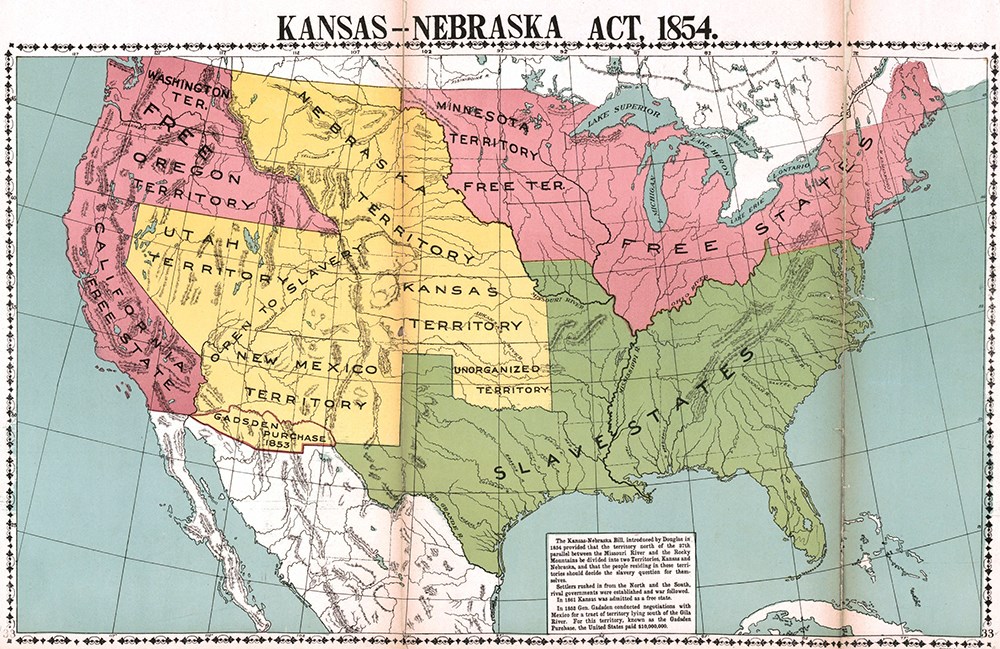
The act repealed the Missouri Compromise restriction and allowed territorial settlers to decide slavery through popular sovereignty.
Bleeding Kansas
Competing governments, fraudulent elections, armed migration, and political violence turned Kansas into a preview of civil war.
Party Realignment
The Whigs collapsed, Northern Democrats divided, and the new Republican Party organized around opposition to slavery’s expansion.
Expansionist Diplomacy
The Gadsden Purchase completed the contiguous southern boundary, while the Ostend Manifesto exposed ambitions to acquire slaveholding Cuba.
The Road to the Presidency
New Hampshire Democrat and Dark-Horse Nominee
Pierce served in the New Hampshire legislature and U.S. House, becoming a loyal Jacksonian Democrat.
At age 32, he entered the U.S. Senate but resigned and returned to law in New Hampshire.
As a brigadier general in the Mexican–American War, he served in Winfield Scott’s campaign toward Mexico City.
After forty-eight Democratic convention ballots, Pierce emerged as a compromise candidate acceptable to competing factions.
He defeated Whig general Winfield Scott in an Electoral College landslide, carrying twenty-seven of thirty-one states.
Weeks before inauguration, Pierce and his wife witnessed the death of their only surviving child in a train derailment.
A presidency born in grief: Eleven-year-old Benjamin Pierce was killed before his parents’ eyes. Jane Pierce interpreted the tragedy as divine punishment for her husband’s ambition, and both entered the White House under overwhelming sorrow.
Defining Decisions
Six Tests of Pierce’s Leadership
Completing the Gadsden Purchase
The United States purchased land from Mexico that now forms parts of southern Arizona and New Mexico, completing the lower continental boundary.
Signing Kansas–Nebraska
Pierce backed Stephen Douglas’s bill even though it repealed a long-standing restriction on slavery’s expansion.
Accepting Popular Sovereignty
He argued that settlers should determine slavery locally, underestimating how rival factions would manipulate elections and use violence.
Allowing the Ostend Manifesto
American diplomats suggested that the United States might seize Cuba if Spain refused to sell it, creating a scandal over expansion and slavery.
Backing Kansas Authority
Pierce recognized the proslavery territorial government despite electoral fraud and condemned the rival Free-State government.
Losing His Party’s Support
Democrats denied the sitting president renomination and chose James Buchanan, who had been abroad during the Kansas–Nebraska controversy.
Constitution & Power
Popular Sovereignty Without Fair Government
Pierce defended local self-government in theory while supporting territorial authority corrupted by intimidation and fraudulent voting.
Popular sovereignty claimed to remove slavery from national politics by allowing settlers to decide. But a legitimate local decision required honest elections, equal protection, and impartial enforcement. When armed Missourians crossed the border to vote illegally, Pierce still recognized the resulting proslavery legislature.
A constitutional process loses legitimacy when government protects one faction’s coercion while suppressing its opponents.The governing lesson of Bleeding Kansas
The constitutional failure: Pierce treated antislavery resistance as the principal threat to lawful order while giving inadequate weight to electoral fraud and proslavery violence. Formal recognition took precedence over representative legitimacy.
Kansas–Nebraska Act
Repealing a Boundary That Had Lasted Since 1820
The Missouri Compromise had prohibited slavery in most of the Louisiana Purchase north of latitude 36°30′. Senator Stephen A. Douglas wanted to organize Kansas and Nebraska, encourage settlement, and support a possible transcontinental railroad.
Douglas’s bill declared the earlier restriction inoperative and allowed settlers to determine slavery through popular sovereignty. Pierce gave the measure crucial presidential support and signed it on May 30, 1854.
The act shattered existing political coalitions. Northern critics saw it as a surrender to the “Slave Power.” Southern leaders viewed resistance as denial of their equal rights in federal territories. The Whig Party disintegrated, and opponents of slavery’s expansion formed the Republican Party.
The political verdict
The law did not remove slavery from national politics. It overturned a settled boundary, nationalized the controversy, and made control of Kansas a test of power between North and South.
Bleeding Kansas
When Ballots Gave Way to Guns
Proslavery and antislavery settlers rushed into Kansas to determine its future. Armed “border ruffians” crossed from Missouri, cast illegal ballots, and helped create a proslavery legislature. Free-State settlers organized a rival government at Topeka.
Violence followed. Proslavery forces sacked Lawrence in May 1856. Days later, John Brown and his followers killed five proslavery men near Pottawatomie Creek. Guerrilla warfare spread across the territory.
Pierce condemned the Free-State government as revolutionary and supported the federally recognized proslavery authorities. His administration’s partiality destroyed its claim to act as a neutral defender of popular sovereignty.
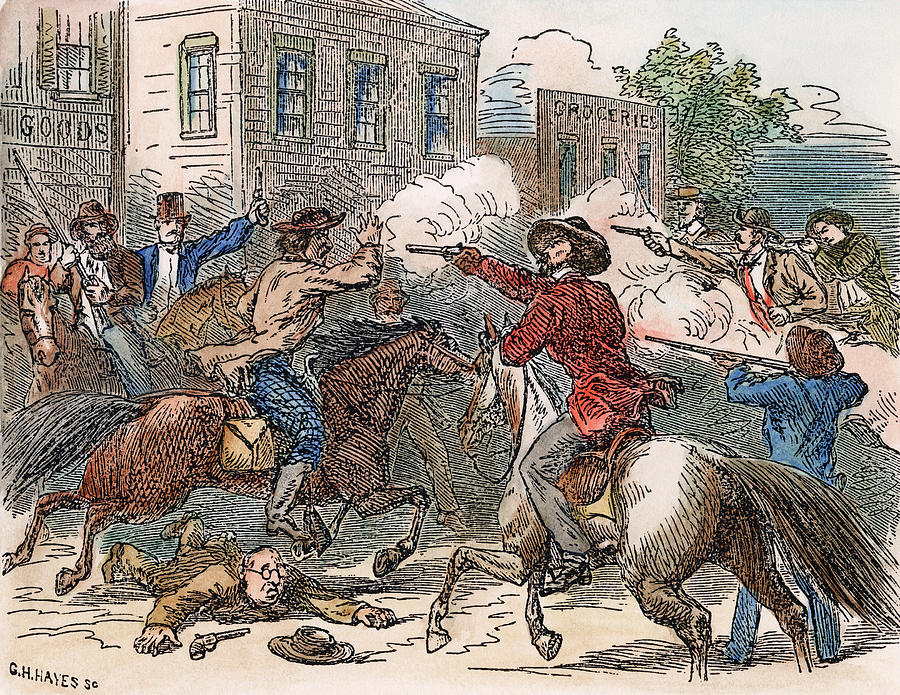
The human cost: Bleeding Kansas demonstrated that procedural slogans could not settle a moral conflict when competing factions rejected the legitimacy of each other’s institutions.
War & Foreign Policy
Commercial Expansion and the Shadow of Cuba
Gadsden Purchase
Negotiated by James Gadsden, the $10 million purchase secured land south of the Gila River and supported plans for a southern railroad route.
Opening Japan
Commodore Perry’s mission, initiated under Fillmore, produced the Convention of Kanagawa during Pierce’s administration.
Canadian Reciprocity
The 1854 reciprocity treaty reduced trade barriers with British North America and promoted regional commerce.
Ostend Manifesto
American diplomats argued that Cuba was strategically necessary and might be taken if Spain refused to sell. Public exposure forced Pierce to retreat.
The expansion problem: Because Cuba permitted slavery, efforts to acquire it appeared to many Northerners to be another attempt to enlarge slaveholding power.
Faith & Character
Personal Warmth, Private Grief, and Public Failure
Religious Background
Pierce was associated with the Episcopal Church, while his wife Jane was deeply rooted in austere Congregational faith and interpreted family tragedy through divine judgment.
Devastating Loss
All three Pierce sons died young. Benjamin’s death immediately before the presidency left the family emotionally broken.
Personal Loyalty
Pierce was charming, generous, and fiercely loyal to friends. Those qualities became political liabilities when loyalty to Southern Democrats displaced impartial judgment.
Alcohol and Decline
Pierce struggled with heavy drinking, especially after personal losses and political rejection, contributing to his decline after public life.
Presidential Scorecard
Pierce’s Record
Procedural but Partial
Invoked lawful authority while tolerating corruption that undermined genuine self-government in Kansas.
Partisan
Used federal authority to support proslavery territorial officials and suppress their Free-State opponents.
Generally Prosperous
Presided during growth, land development, and trade expansion before the Panic of 1857.
Mixed
Achieved the Gadsden Purchase and commercial agreements, but the Ostend Manifesto damaged American credibility.
Destructive
His signature initiative shattered parties, intensified violence, and made national compromise harder.
Severely Damaged
His accommodation of slavery’s expansion and partiality in Kansas accelerated a national moral catastrophe.
After the Presidency
Opposition to Lincoln and Loyalty to the Old Union
Pierce supported James Buchanan in 1856 but never returned to national office. During the Civil War, he criticized Abraham Lincoln’s suspension of civil liberties and other wartime measures.
His long friendship with Confederate president Jefferson Davis made him politically suspect in the North, though Pierce remained loyal to the United States and did not support secession.
He died in Concord, New Hampshire, on October 8, 1869. The country he had tried to hold together through concession had survived only after civil war and emancipation.
Lasting Legacy
The Conciliator Who Deepened the Crisis
Pierce entered office promising national unity. He possessed political skill, administrative experience, and overwhelming electoral support. Yet he misunderstood the nature of the slavery conflict.
He treated antislavery resistance as dangerous agitation and concession to slaveholding interests as constitutional balance. Kansas exposed the weakness of that approach: government could not remain neutral while recognizing institutions produced through coercion.
Final assessment
Franklin Pierce hoped to preserve the Union through accommodation, but his policies empowered the forces pulling it apart. The Kansas–Nebraska Act destroyed a long-standing restriction, Bleeding Kansas exposed his administration’s partiality, and the Republican Party rose in direct response. His personal tragedies deserve compassion; his presidential decisions require severe judgment.
Sources & Further Reading
Trace the Evidence
- Miller Center: Franklin Pierce
- White House Historical Association: Franklin Pierce
- Library of Congress: Franklin Pierce Resource Guide
- United States Senate: Kansas–Nebraska Act
- National Park Service: Bleeding Kansas
- Office of the Historian: Gadsden Purchase
- Office of the Historian: Ostend Manifesto
- Office of the Historian: Opening to Japan