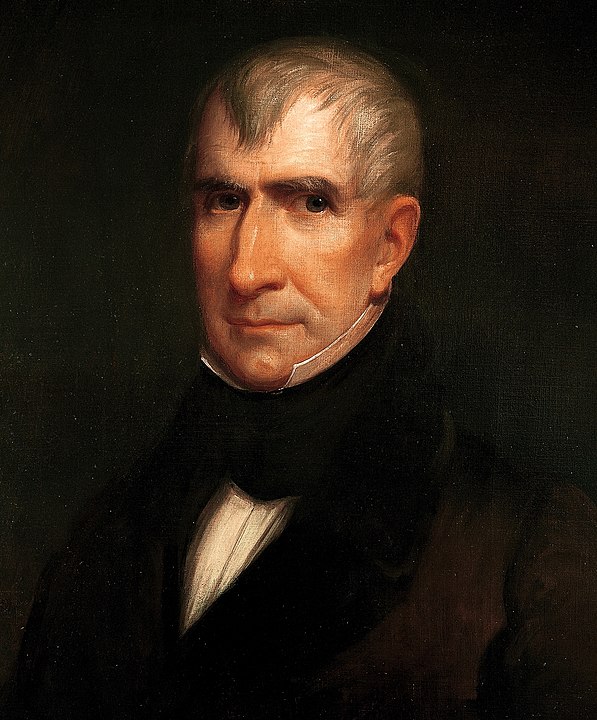
9th President • March 4–April 4, 1841
William Henry Harrison
A celebrated general rode the first great mass-media presidential campaign into the White House, only to die one month later. His presidency produced almost no policy—but his frontier career and sudden death left difficult legacies of conquest, political marketing, and constitutional succession.
Why He Matters
The Briefest Presidency—and a Long Shadow
Harrison had no time to establish a presidential record. His historical importance rests on the western expansion he advanced before taking office, the campaign culture that elected him, and the succession precedent triggered by his death.
Old Tippecanoe
Victories at Tippecanoe and the Thames made Harrison a symbol of western settlement and military strength, while masking the Native dispossession underlying those campaigns.
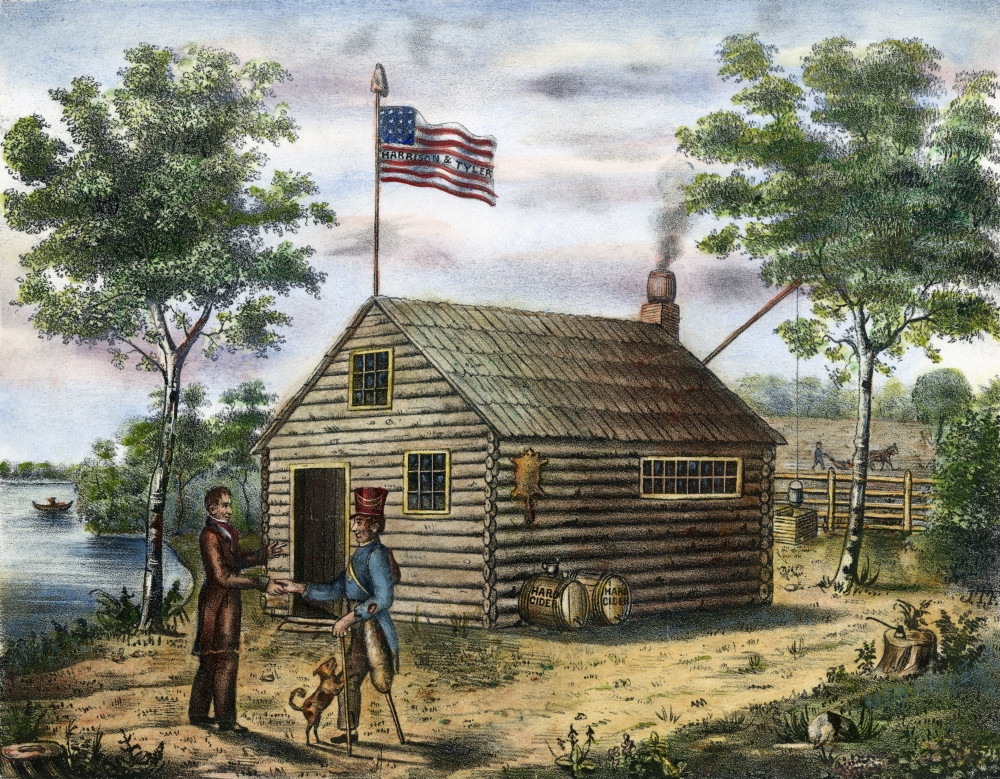
The Log Cabin Campaign
The Whigs turned a criticism of Harrison into brilliant imagery: log cabins, hard cider, songs, rallies, and “Tippecanoe and Tyler Too.” Modern image-driven campaigning had arrived.
A Whig Experiment Interrupted
Harrison promised to restrain executive power and cooperate with Congress. His death prevented any meaningful test of whether the Whig vision could govern.
The Tyler Precedent
John Tyler insisted that the vice president became president—not merely acting president. That interpretation guided later successions and was ultimately confirmed by the Twenty-Fifth Amendment.
The Road to the Presidency
Soldier, Governor, and Symbol of the West
Harrison joined the Army, served under General Anthony Wayne, and fought at Fallen Timbers, which weakened Native resistance in the Ohio Country.
As a territorial delegate and governor of Indiana Territory, he promoted settlement and negotiated treaties transferring millions of acres of Native land to the United States.
Harrison marched against Prophetstown, the center of Tecumseh and Tenskwatawa’s confederacy. The Battle of Tippecanoe became the foundation of his national fame.
During the War of 1812, Harrison commanded the Army of the Northwest. His victory at the Battle of the Thames broke British power in the region and Tecumseh was killed.
He served in the U.S. House, Ohio Senate, U.S. Senate, and briefly as minister to Gran Colombia before returning to private life.
After losing as one of several Whig candidates in 1836, Harrison won the unified Whig nomination and defeated Martin Van Buren amid economic depression.

Defining Decisions
Six Turning Points Before and During Office
Acquiring Native Lands
Harrison used treaties, annuities, factional divisions, and federal leverage to open the Indiana Territory to settlement. Native leaders often disputed whether signers had authority to surrender shared lands.
Treaty of Fort Wayne
The treaty transferred roughly three million acres and intensified Tecumseh’s campaign for an intertribal confederacy. Harrison rejected Tecumseh’s claim that Native land was held collectively.
Marching on Prophetstown
Harrison’s force fought Tenskwatawa’s warriors while Tecumseh was away. The Americans held the field and destroyed Prophetstown, but conflict with the confederacy continued.
Battle of the Thames
The victory restored American control in the Northwest and destroyed the core of Tecumseh’s alliance. It also accelerated the loss of Native power in the Old Northwest.
Embracing Campaign Spectacle
Whig organizers sold Harrison as a humble frontier hero, though he came from a wealthy Virginia family. The successful mythology mattered more than the biographical reality.
Resisting Patronage Pressure
During his few weeks in office, Harrison faced crowds of office seekers and tensions with Henry Clay. He signaled that he—not congressional leaders—would control executive appointments.
Constitution & Power
A Presidency Intended to Defer to Congress
Harrison entered office promising a reaction against Andrew Jackson’s expansive presidency.
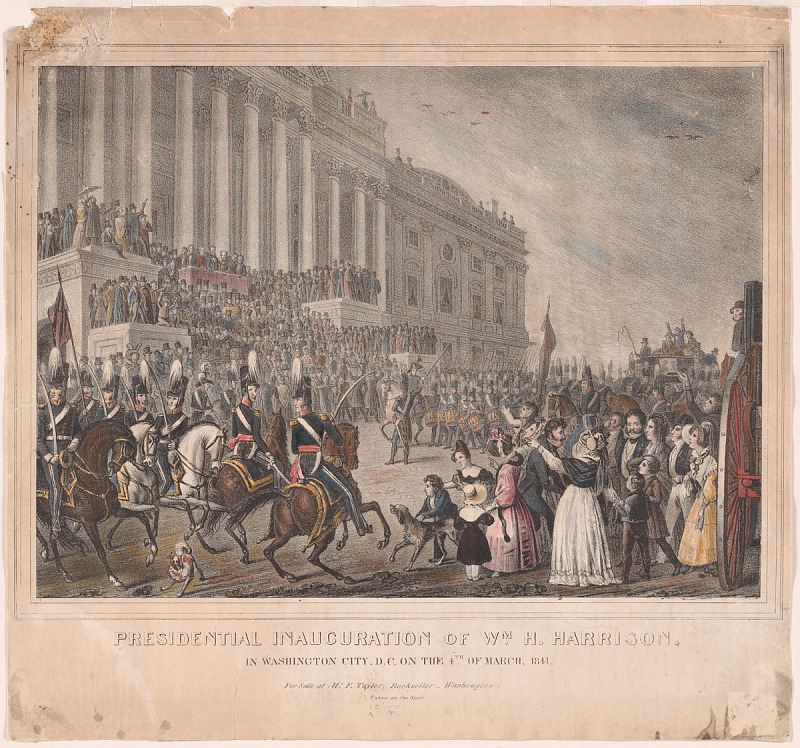
His inaugural address opposed executive interference in legislation, warned against a president seeking reelection, defended congressional control of public finance, and criticized patronage. Whigs expected Congress to lead on a national bank, tariffs, and economic policy. Yet Harrison’s early dispute with Henry Clay showed that even a restrained president would defend the independence of the executive branch.
“The tendency of power to increase itself, particularly when exercised by a single individual, would seem to indicate the expediency of rendering the chief magistrate ineligible after one term.”William Henry Harrison • Inaugural Address, 1841
The limit of the evidence: Harrison’s program remained mostly an intention. With Congress not yet assembled and the president dead after one month, historians cannot know how he would have governed through sustained conflict.
Native Nations & Western Expansion
The Cost Behind the Heroic Legend
Harrison’s fame grew from a struggle over the future of the Old Northwest. American settlers and officials treated territorial expansion as national progress. Tecumseh argued that no individual tribe could sell land belonging to Native peoples collectively and attempted to unite nations against further cessions.
As territorial governor, Harrison pursued land acquisition as a central responsibility. Some treaties included leaders whose authority was contested, and debt, alcohol, annuity payments, and political pressure weakened Native bargaining power. Tippecanoe and the Thames were military victories for the United States, but they also broke organized resistance to dispossession.
Historical responsibility: Harrison did not create American expansion, but he was one of its most effective agents. A serious judgment must see both the military achievement admired by his contemporaries and the loss suffered by Native communities.
Faith & Character
Duty, Ambition, and Public Reputation
Episcopal Background
Harrison was raised in Virginia’s Anglican-Episcopal culture. His public language invoked Providence and moral duty, but surviving evidence does not reveal an especially theological presidency.
Courage and Persistence
He endured frontier campaigns, political defeats, and years outside power before winning the presidency at sixty-eight. His career demonstrated patience as well as ambition.
Slavery and Freedom
Born into a slaveholding family, Harrison owned enslaved people earlier in life. As territorial governor, he also supported efforts that could have permitted slavery or long-term involuntary servitude in Indiana Territory.
Reality and Manufactured Image
The humble log-cabin persona was campaign theater. Harrison understood elite society and national office, but allowed himself to become the central character in a carefully constructed populist story.
Illness, Death & Succession
The Crisis No Administration Had Faced
Harrison delivered the longest inaugural address in American history on a cold, wet day without an overcoat. The familiar story says this caused pneumonia and killed him. He did become ill weeks later, but the timing makes a direct connection doubtful. Modern researchers have proposed enteric fever linked to contaminated water near the White House; the exact diagnosis remains uncertain.
He died on April 4, 1841, becoming the first president to die in office. Article II said presidential “powers and duties” devolved on the vice president but did not clearly state whether the vice president became president. John Tyler took the oath, assumed the full title and authority, and refused documents addressed to an “acting president.”
The constitutional consequence
Harrison’s greatest effect on the presidency occurred through his death. The “Tyler Precedent” established full presidential succession and guided the country until the Twenty-Fifth Amendment made the rule explicit in 1967.
Presidential Scorecard
Harrison’s Record
Unrealized Whig Vision
Promised executive restraint and congressional leadership but had no time to implement the program.
Indeterminate
Defended appointment authority while rejecting the Jacksonian model of presidential dominance.
No Record
Died before Congress could consider the Whig economic agenda.
Historically Significant
Helped secure the Northwest while advancing the dispossession of Native nations.
Campaign Breakthrough
His victory demonstrated the power of symbols, songs, rallies, and manufactured biography.
Too Brief to Rank
His death and Tyler’s succession mattered more than any act of his administration.
Lasting Legacy
A Life More Consequential Than a Presidency
Harrison reached the White House through military fame and unprecedented political marketing. His campaign helped turn elections into mass public spectacles and showed that a party could construct a compelling identity around symbols more powerful than policy details.
His pre-presidential career demands a harder judgment. The victories that made him a hero also advanced the transfer of Native homelands to American control. His presidential intentions suggested restraint after the Jackson era, but thirty-one days cannot prove what his administration would have become.
Final assessment
William Henry Harrison cannot be meaningfully judged as a governing president, but he cannot be dismissed as historically unimportant. His frontier career helped reshape the nation’s geography, his campaign reshaped presidential politics, and his death forced the constitutional system to decide what presidential succession meant.
Sources & Further Reading
Trace the Evidence
- Miller Center: William Henry Harrison
- White House Historical Association: William Henry Harrison
- Library of Congress: Harrison Digital Collections
- Biographical Directory of the United States Congress
- National Park Service: William Henry Harrison
- Avalon Project: Harrison’s Inaugural Address
- United States Senate: Harrison’s Death and Succession
- National Constitution Center: Presidential Succession